Located in northeast Florida
Putnam County
KF4CWI

Monday evening net:
147.060+ Repeater
at 7pm

Meetings are on the
3rd Tuesday of each month
at 7pm

Meetings are held at:
Hillcrest Baptist Church
2009 President St.
Located at the corner of
President St. and Moseley Av.
Palatka, Florida
Talk-in 146.520 simplex

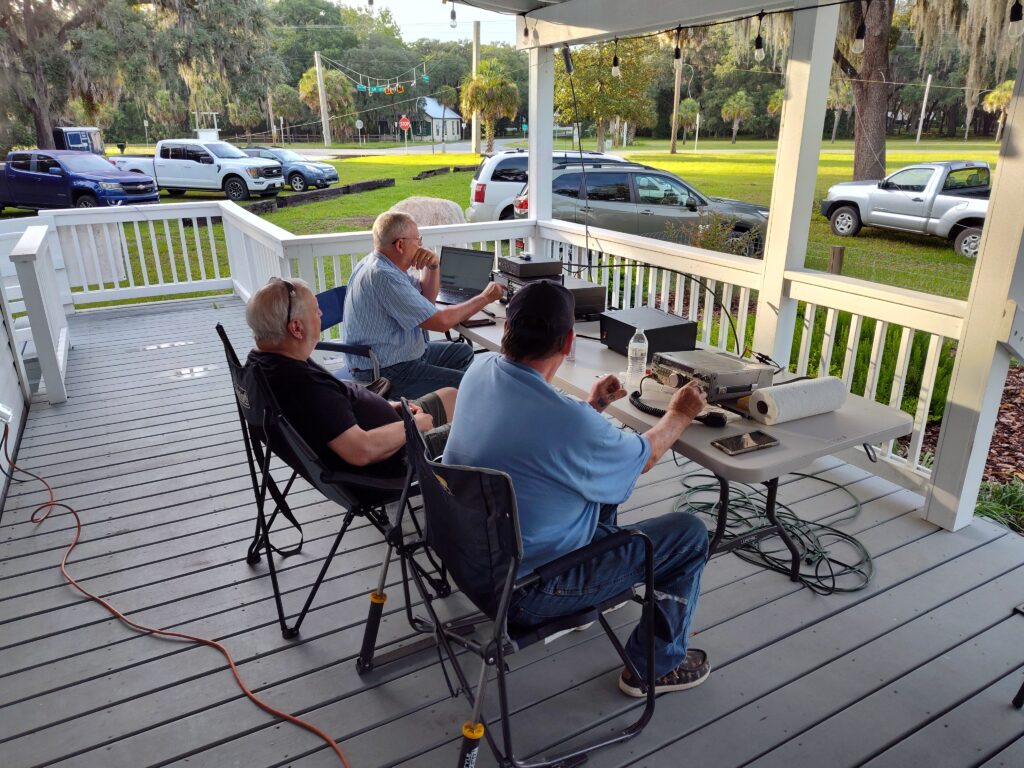
Winter Field Day 2026 – Palmetto Hall – 102 S Magnolia Ave, Florahome, FL 32140

As a part of our commitment to Amateur Radio we offer free ARRL Amateur Radio Testing Sessions at our regular monthly meetings. Just give us a heads up that you want to test or upgrade your license.

THE PURPOSE OF THE PALATKA AMATEUR RADIO CLUB (PARC), INC. shall be the furthering of Amateur Radio, exchange of information and cooperation between members to promote amateur radio knowledge, participation, and individual operating efficiency, and to conduct club programs and activities as to advance the general interest and welfare of Amateur Radio and provide such service and support as may be made available, to the community all in accordance with the rules and regulations of The Federal Communications

Club Repeaters

147.060+
Analog

CTS Tx/Rx 123.0/123.0
Location Hollister, FL
Echolink Node 515424

443.900+ Analog/System Fusion
CTS Tx/Rx 94.8/94.8
Location Hollister, FL

147.060+
DMR Brandmeister
CTS Tx/Rx 123.0/123.0
Color Code 1
Full-time on Time Slot 1:
314939 (repeater local)
3124802 (PARC)
31128 (NE FL ARES)
311099 (Florida Digital Amateur Radio Network)
Location Hollister, FL

147.060+
DMR Brandmeister
CTS Tx/Rx 123.0/123.0
Color Code 1
Full-time on Time Slot 2:
3112 (Florida Statewide)
31121 (First Coast DMR)
31127 (FL Statewide ARES)
Location Hollister, FL

A Note on Amateur Radio Operators Who Serve in Times of Need

Amateur radio operators—often called “hams”—are licensed enthusiasts who use radio equipment to communicate across local, regional, and even global distances. While many pursue the hobby for its technical challenges, social connections, and love of radio, a core and deeply respected aspect of the amateur radio community is its commitment to public service, especially during emergencies and crises.

Typical Roles During Emergencies

Why Service Matters to Hams

  1. Rapid, Independent CommunicationWhen conventional communication networks (cellular, internet, landlines) fail—whether due to natural disasters, power outages, or infrastructure damage—amateur radio can operate independently of those systems. Hams can quickly set up portable stations, mesh networks, or satellite links to relay vital information.
  2. Community ResilienceLocal ham clubs often coordinate with emergency management agencies, shelters, hospitals, and relief organizations. By providing real‑time status updates, coordinating volunteer efforts, and relaying messages for families, they become an essential part of a community’s resilience plan.
  3. Training and PreparednessMany operators regularly practice emergency drills, learn to operate under adverse conditions, and maintain equipment ready for deployment. This ongoing preparation ensures that when a crisis strikes, they can respond efficiently and effectively.
Role Description
Message Relay (Traffic) Transmit SOS calls, health updates, supply requests, and situational reports between affected areas and response teams.
Field Communications Set up temporary “field stations” near disaster zones to link first responders, shelters, and command centers.
Public Information Broadcast official advisories, safety instructions, and evacuation notices to the public via local repeaters or net broadcasts.
Technical Support Assist in establishing satellite uplinks, power solutions (solar, generators), and antenna installations for sustained operations.
Volunteer Coordination Organize and dispatch volunteers, track resources, and manage logistics through dedicated nets.

Core Values That Drive Service

  • Selflessness: Hams prioritize the well‑being of others over personal convenience, often working long hours in challenging environments.
  • Reliability: They maintain equipment, licenses, and skills so they can be counted on when needed most.
  • Collaboration: Amateur radio is inherently collaborative; operators share frequencies, expertise, and resources freely.
  • Education: Many seasoned hams mentor newcomers, ensuring the next generation is prepared to continue the tradition of service.

Getting Involved

If you’re interested in supporting or joining this spirit of service:

  1. Join a Local Amateur Radio Club – Clubs typically host regular meetings, emergency drills, and mentorship programs.
  2. Earn Your License – In most countries, a licensing exam is required. Study guides and online courses are widely available.
  3. Participate in Emergency Nets – Many regions run scheduled “emergency nets” where operators practice handling simulated disaster traffic.
  4. Volunteer with Organizations – Groups such as the Amateur Radio Emergency Service (ARES) in the U.S., Radio Amateurs’ Emergency Network (RAYNET) in the U.K., or similar bodies worldwide welcome volunteers.
  5. Stay Prepared – Keep a portable “go‑kit” with a handheld transceiver, spare batteries, antennas, and a basic logbook.

Amateur radio operators who dedicate themselves to service embody the principle that communication is a lifeline. Their readiness, technical skill, and community spirit make a tangible difference when ordinary channels falter, helping people stay connected, informed, and safe during the moments that matter most.

This article was Written with assistance from Lumo, the Proton AI assistant